
In each iteration of 40 Under 40 we have encountered a variation on an age-old problem: how do you navigate short-term noise while keeping long-term considerations on track? The 2022 class is no different.
For Sergi Casoliva, a portfolio manager at Caja de Ingenieros, this is the largest obstacle up-and-coming fund buyers have to face.

‘The biggest challenge is being able to balance a long-term mindset with short-term goals, while trying to always preserve capital under any situation. Having a long-term view is not enough to beat peers and the benchmark, and quickness and flexibility are a must to adapt to the new environment.’
Based on the responses to this year’s survey, Casoliva is far from alone. Marius Valantiejus, a fund analyst at Nordic group Storebrand echoed his points. ‘[For me, it’s] keeping the focus on the long term as well as prioritising, as there is a constant flow, availability and frequent update of so much data, both hard and soft.’
Information overload was mentioned by several fund buyers this time around. David Sánchez Sánchez, head of fund selection and fund of funds management at Santalucía Asset Management, said all investors need to evidence deep knowledge across asset classes, regulation risk and business needs, which is no small order.

‘Keeping up with the information flow’ was singled out by HQ Trust’s Jan Tachtler as exceptionally time consuming. ‘There is always more information to gather or more data points to collect. But filtering out what is relevant and analysing the impact on your investments can be quite a challenge.’
Simon Landt, who operates within the quant arm of fellow German group MM Warburg, offered a similar appraisal of the markets. ‘One of the biggest challenges is to stick to the long-term investment strategy and not to get distracted by short-term market fluctuations. One must distinguish between noise and relevant market information – no easy undertaking in the age of Big Data.’
Finding a fit
Timeframes and data overloads are high on the agenda – especially in the oscillating markets of 2022 – but for others the biggest challenges revolve around the day-to-day tasks of unearthing outperforming fund managers.

Amelia Benito Bondia, a portfolio manager at Ibercaja Gestión, said selectors must be wary about falling in love with managers who produce short-term outperformance or have done so recently, rather than those who may be better suited for the world ahead.
Similar concerns were also raised by ATL Capital’s Beatriz Hernández Ribes. ‘When in deep drawdowns, you need to remind investors of the importance of diversification, time horizon targets and avoiding emotional investment decisions,’ she said.

‘Screening managers able to generate pure idiosyncratic alpha is already a big task,’ said Clément Chaulot, who works for Tethys. ‘But finding ones showing regularity in doing this is very hard. The key to me is to introduce a lot of diversity in my portfolio and then to be patient with short-term underperformance and allow a manager sufficient time to demonstrate their skills.’
ESG challenges
It was always likely ESG would prove a contentious issue, even among the newer crop of investors, who are historically viewed as those most likely to push green ideas. Wouter van der Stee said the constantly evolving landscape around sustainability means investors need to be more nimble than ever.
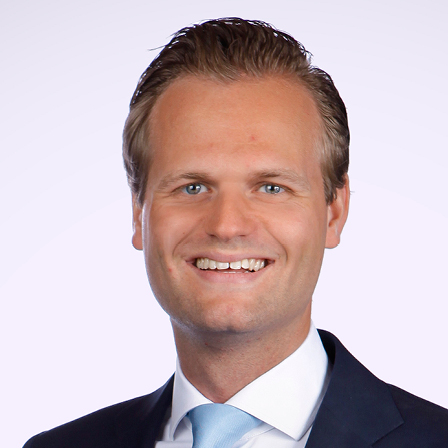
Van der Stee, a manager researcher at Dutch group Kempen, said pragmatism is likely to rule the day in this arena. ‘ESG is very complex and almost every client has their own set of beliefs when it comes to sustainable investing,’ he said.
Given the year that many have faced so far, an overarching message of being flexible was a popular message among respondents. ‘The current economic context is something that not even the most experienced have gone through in their careers,’ said Roberto Morago, who covers multi-asset portfolios at Crèdit Andorrà.
‘The biggest challenge is to manage these uncertainties in the most appropriate way to generate a consistent alpha in our portfolios. Fund selection is essential to achieve this objective. Understanding the way a manager thinks will help us anticipate how he will act in the future.’